
TulixCDN Launches HTTP/3 on QUIC
"HLS over HTTP/3 (QUIC)" is a modern delivery method for Live TV streaming that starts playback faster and performs better on mobile and unstable networks. Unlike legacy HLS, which relies on older TCP connections, HTTP/3 uses QUIC to reduce buffering, recover faster from packet loss, and maintain smooth playback when users switch between Wi-Fi and cellular networks. The video format remains standard HLS, so it works seamlessly with existing players while delivering a better viewing experience.
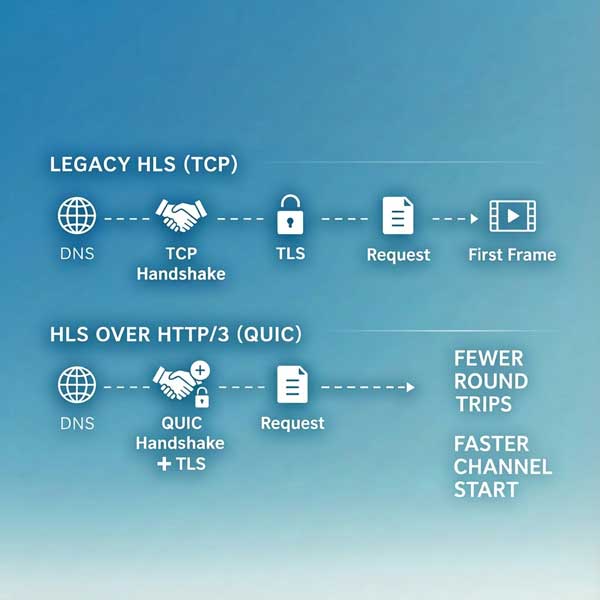
Why It's Time to Move Your HLS Streaming to HTTP/3/QUIC with Tulix - Now, Not "Someday"
If you're still delivering HLS over HTTP/1.1 or even HTTP/2, you're leaving performance, reliability, and real money on the table. HTTP/3 over QUIC is here, and Tulix Systems, Inc. is turning it into a decisive competitive advantage for serious streaming services.
The Problem: Classic HLS + Legacy HTTP = Latency, Jitter, and Lost Viewers
-
Traditional HLS over HTTP/1.1 and HTTP/2 has served the industry well, but it carries structural baggage:
- High and inconsistent latency - Classic HLS often introduces 15-30 seconds of delay. Even with low-latency tweaks, TCP head-of-line blocking and slow recovery from packet loss cap how low you can realistically go.
- Fragile mobile experiences - Viewers on congested 4G/5G and Wi-Fi see stutters, rebuffering, and wild quality swings whenever packets are lost or networks change.
- Scale vs. interactivity trade-offs - You can have robust, cache-friendly HTTP delivery or ultra-low latency-but getting both has historically required complex, multi-protocol stacks and engineering overhead.
The result is simple and painful: churn. Every time a high-value live event freezes, or your stream lags social media by 20+ seconds, you're training viewers to look elsewhere.
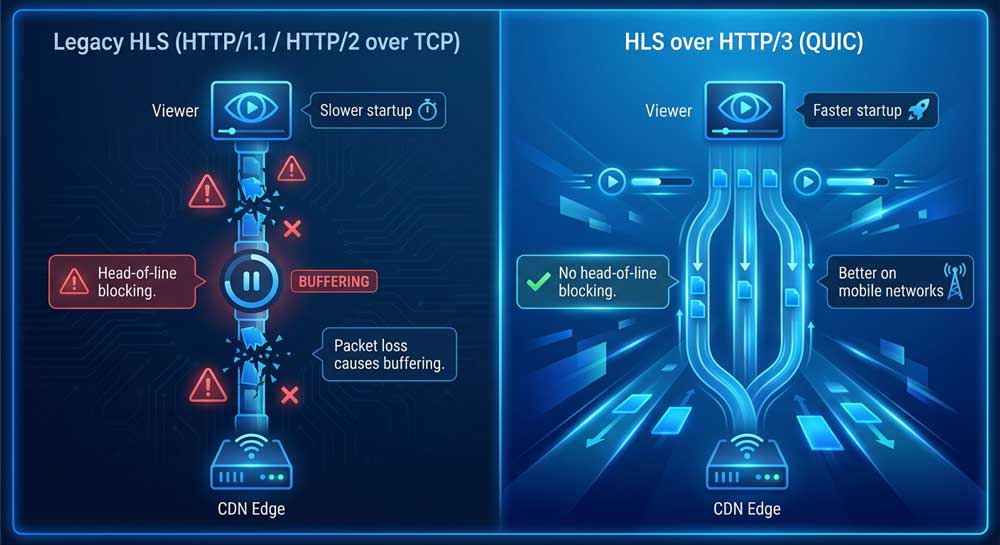
Faster, Smoother Streaming with HTTP/3 and QUIC on Tulix
Streaming audiences expect instant playback, smooth video, and reliable performance -no matter the network or location. Yet many delivery technologies powering today's platforms were built long before mobile streaming, global audiences, and real-time media became the norm.
That's why Tulix now supports HTTP/3 and QUIC, next-generation transport technologies designed to deliver faster, more reliable, and more secure streaming experiences
Traditional Delivery
Single-connection delivery slows everything down when network conditions change.
- Slow start times
- Buffering on mobile
- Higher latency globally
HTTP/3 + QUIC
A modern delivery protocol designed for today's networks.
- Multiple streams run independently
- Traffic keeps moving during packet loss
- Faster, more resilient connections
Upgrade Benefits
Designed to improve playback quality and reliability at scale.
- Faster playback start
- Fewer interruptions
- Better mobile performance
- Built-in security
Important note: Tulix CDN continues to deliver a high-quality streaming experience on legacy HTTP protocols, with global reach, optimized caching, and proven reliability. HTTP/3 + QUIC builds on this foundation to further improve performance in challenging network conditions.
Why This Matters for Streaming Platforms
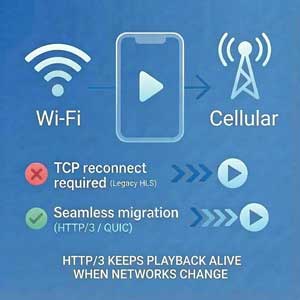
With HTTP/3 and QUIC, Tulix customers benefit from:
- Improved viewer experience
- Better performance on mobile and unstable networks
- Reduced churn caused by playback issues
- Optimized delivery for global audiences
You don't need to change your content-just how it's delivered.
Ideal Use Cases
This upgrade is especially valuable for:
- Live TV and live events
- OTT and video streaming platforms
- Global media delivery
- Real-time and latency-sensitive services
Future-Ready Streaming Starts Here
HTTP/3 and QUIC are standardized, widely supported, and already used at massive scale. With this upgrade, Tulix delivers faster load times, smoother playback, and reliable performance across any network.
For More Information:
Tulix provides all the important data you could need/want to understand your audience. For more information about these statistics and why they matter, give us a call at +1 404 584 5035.